Temporary is a duration, not a shortcut
A pavilion may occupy a site for a season, a festival or a brief exhibition. That short stay does not remove the need for appropriate structural design, fire safety, accessibility or permissions. A lightweight canopy still meets wind, rain and people. In some cases, the demand for rapid assembly makes the engineering problem more complicated, not less.
Begin by separating the life of the installation from the life of its parts. A pavilion can leave a site after a few weeks while its frame remains useful for years. Conversely, a supposedly reusable structure may be damaged during removal or have no destination. The word “temporary” tells us when an occupation ends; it does not tell us what happens next.
Design the intermediate states
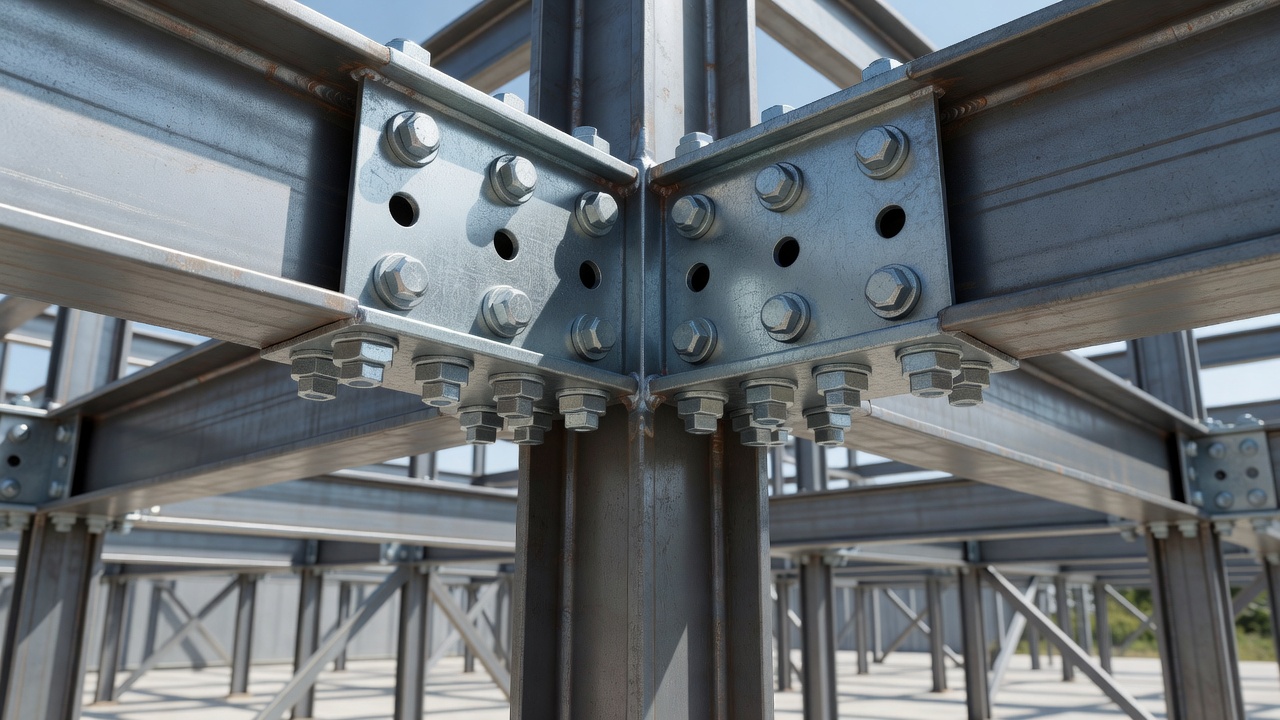
A completed frame may be stable while a half-assembled one is not. The construction sequence therefore belongs to the design, not merely to a later instruction sheet. Ask when bracing appears, how elements are held before connections are complete and whether lifting equipment can reach the relevant positions without damaging the site.
Repetition helps only when components are identifiable and tolerances are realistic. Similar-looking pieces can have different roles, and a small accumulated error can make the last connection difficult. Full-scale prototypes are valuable because they reveal tool clearance, handling effort and awkward alignments that a clean digital model may hide. They also let a team test whether the proposed dismantling sequence genuinely reverses the assembly.
The ground connection matters most
Images of temporary pavilions often crop out their foundations. Yet the connection to the ground can determine transport requirements, site disturbance and how easily the place can be restored. Ballast, anchors and other foundation solutions have different constraints; none is automatically harmless or suitable everywhere. Ground conditions and underground services require project-specific assessment.
Read the base as carefully as the roof. Does a raised platform create an accessible approach? Where does water collect? Can protective layers be removed without leaving contaminated or compacted ground? A claim of light touch needs evidence at the soil line, including the practical work of reinstatement after the structure has gone.
Historical experiments, present questions
Shigeru Ban's Japan Pavilion for Expo 2000 in Hannover is a useful reference for exploring paper-tube construction and the ambition to reduce waste. Its significance is not a license to assume that all paper-based structures are simple, weatherproof or readily recyclable. Treatment, connections and the actual recovery process must be examined as part of the assembly.
The Serpentine programme in London offers another way to discuss time: a commissioned pavilion occupies a familiar site for a limited season, yet some structures have later lives elsewhere. Melbourne's MPavilion programme also provides examples of relocation and continued use. Research each individual project's documented outcome instead of treating a programme-wide ambition as proof that every component found a second use.